If you’re interested in dysfunctional fathers and dystopias

I’m not sure if this is the right title for this post and this selection of books – but if you read them you’ll know what I mean! All the books in the collection below have a similar feeling to them, whether that’s in their characters, themes, or settings – and they’re all bloody good reads too.

If you like books that are dystopian and through that examine the role of the father or the role of women then this selection is for you.

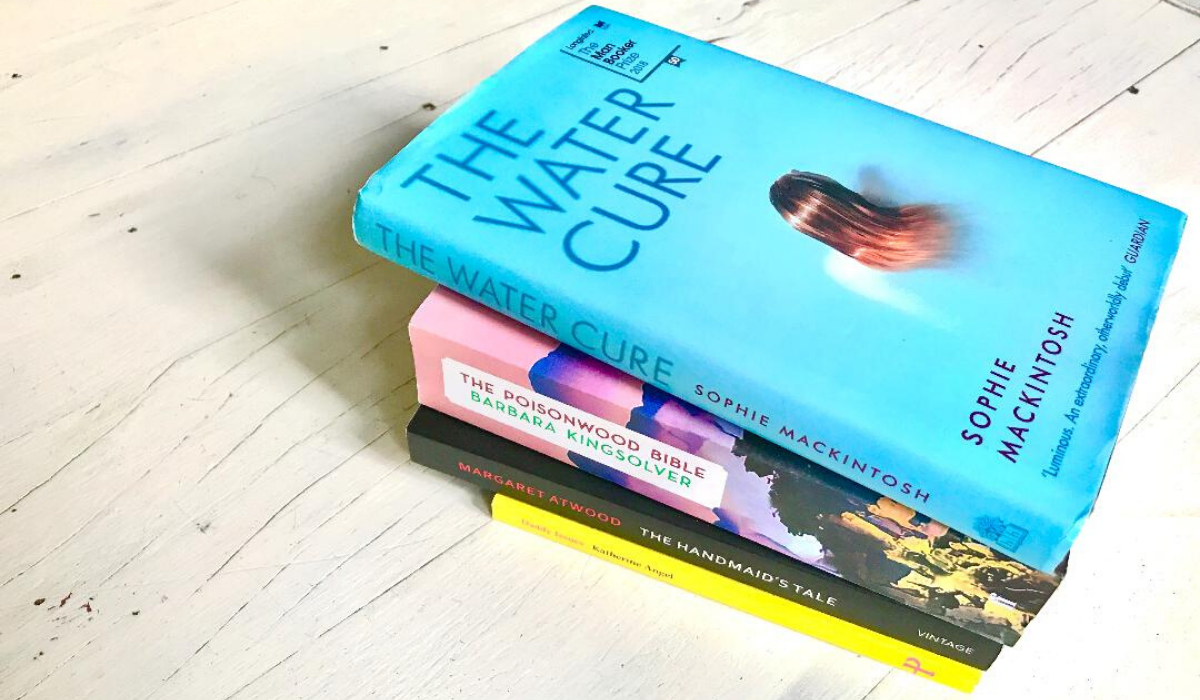
The Water Cure – Sophie Mackintosh (fiction)

What’s it about? Three girls, Grace Lia and Sky live with their parents on what they think is an island, quarantined from a world plagued by disease and violence. Their mother and father subject them to ‘therapies’ to keep them safe. They play host to damaged women who come to them from across the sea, ruined by men. Then one day, their father King is killed.

Why might I like it? The Water Cure is an exceptional work of fiction, something totally original that explores the plight of women and the innate risks they face. It also deals with dysfunctional families, love, rejection, pain and death. It makes you wonder whether the atrocities we carry out against one another as humans are ‘natural’ or ‘nurtured’ and how gendered responses and roles define our lives.

You might also like:

The Poisonwood Bible – Barbara Kingsolver (fiction)

What’s it about? The Poisonwood Bible is a story told by the wife and four daughters of Nathan Price, a fierce, evangelical Baptist who takes his family and mission to the Belgian Congo in 1959. They carry with them everything they believe they will need from home, but soon find that all of it — from garden seeds to Scripture — is calamitously transformed on African soil. What follows is a suspenseful epic of one family’s tragic undoing and remarkable reconstruction over the course of three decades in postcolonial Africa.

Why might I like it? Kingsolver can write women. The story is unique and beautifully told through their eyes. We explore the relationships between the sisters and the relationships they have with their parents. The dynamic with their father is particularly interesting.

You might also like

The Handmaid’s Tale – Margaret Atwood (fiction)

What’s it about? Offred is a Handmaid in the Republic of Gilead. In a world not too far away from our own, women have become with wife, handmaid or servant. Offred remembers the time before, the daughter that was stolen from her and finds a spark to fight against the system.

Why might I like it? Although not directly dealing with a dysfunctional father the book does deal with the huge issue of patriarchy, the oppression of women and feminism. Masterfully told by Atwood is it a must-read piece, now more than ever.

And finally you might also like:

Daddy Issues – Katherine Angel (non-fiction)

What’s it about? In the wake of the #MeToo movement and Trump’s presidency Katherine Angel explores the resurgence of the patriarchy and the role of “daddy” in modern feminism. Using reference points in film, literature, journalism, art and politics, Angel unpicks a classic Freudian view of the father/daughter relationship.

Why might I like it? Angel asks how we use fathers to help dismantle the patriarchy and examines the roles society places on both fathers and daughters that ultimately perpetuate the oppression of women. Her insight into traditional male behaviours is fascinating, for example the way father’s are expected to immediately dislike daughter’s lovers has roots in the history of the father protecting his property i.e. his daughter’s virginity.

Have you read any of the books listed above? What did you think? Have you read any others that you think should go in this collection? Let me know in the comments below!

If you want brilliant, feminist writing…

Feminism must be accessible. We live in a time when our culture is changing; it sometimes feels like we’re springing backwards over the decades. Our attention spans are minimal and we get most of our information online. It is more important than ever that messages against oppression in any form are able to reach and engage their audiences.

With this in mind, I’ve pulled together this little selection of brilliant, pithy and frankly just amazing books on feminism. If you only read one of them your life will be enriched!

Women and Power: A Manifesto – Mary Beard (non-fiction)

What’s it about? Mary Beard gets straight to the point, addressing the abuse of women by misogynists and online trolls. She traces the roots of this misogyny through history. From Medusa to Philomela (whose tongue was cut out), from Hillary Clinton to Elizabeth Warren (who was told to sit down), Beard draws illuminating parallels between our cultural assumptions about women’s relationship to power—and how powerful women provide a necessary example for all women who must resist being vacuumed into a male template.

Why might I like it? It is to the point. I believe (and I might be wrong) it is based on a lecture she gave so you can devour the whole thing in one sitting. Beard’s writing is engaging and accessible and she makes points about power that are very interesting. Most importantly you’ll come away from this book with thoughts about your own lived experience.

You might also like…

Daddy Issues – Katherine Angel (non-fiction)

What’s it about? In the wake of the #MeToo movement and Trump’s presidency Katherine Angel explores the resurgence of the patriarchy and the role of “daddy” in modern feminism. Using reference points in film, literature, journalism, art and politics, Angel unpicks a classic Freudian view of the father/daughter relationship.

Why might I like it? Angel asks how we use fathers to help dismantle the patriarchy and examines the roles society places on both fathers and daughters that ultimately perpetuate the oppression of women. Her insight into traditional male behaviours is fascinating, for example the way father’s are expected to immediately dislike daughter’s lovers has roots in the history of the father protecting his property i.e. his daughter’s virginity.

You might also like….

Men Explain Things To Me – Rebecca Solnit (non-fiction)

What’s it about? Rebecca Solnit took on what often goes wrong in conversations between men and women. She wrote about men who wrongly assume they know things and wrongly assume women don’t, about why this arises, and how this aspect of the gender wars works, airing some of her own hilariously awful encounters.

Why might I like it? This is an insightful and thought-provoking collection of feminist essays that take us up to about 2014. Solnit writes about these issues in an accessible way not overcomplicating her point but setting out well reasoned and evidence supported arguments and facts. The collection ends on a positive note maintaining that the journey to equality is moving slowly forward – I wonder whether this is still the case given events in the US and UK from 2016 onwards, and indeed globally. Sometimes it feels as though we have lost a lot of ground.

You might also like…

Unmastered: A Book On Desire Most Difficult To Tell – Katherine Angel (non-fiction)

What’s it about? ‘Unmastered’ is a new kind of book that allows us to think afresh about sex and desire. Incisive, moving, and lyrical, it opens up a larger space for the exploration of feelings that can be difficult to express.

Why might I like it? Katherine Angel’s book is an exploration of female and male power, specifically in reference to desire. In being candidly open she questions how we interact with one another in relationships and in the wider world and how our gendered roles inform so much, so incorrectly, about our lives. It is written in brief, almost poetic statements, which means it can devoured in a single sitting, which I think is necessary to get the full feel, although her message is also etched into every single line she writes. Although she is telling an incredibly personal story it is one that we have all, in one way or another experienced.

You might also like…

Lucky – Alice Sebold (memoir)

What’s it about? In a memoir hailed for its searing candour and wit, Alice Sebold reveals how her life was utterly transformed when, as an eighteen-year-old college freshman, she was brutally raped and beaten in a park near campus.

Why might I like it? In what is at times a very difficult read, Sebold ultimately shows how she came through trauma and illuminates the experience of trauma victims even as she imparts wisdom profoundly hard-won: “You save yourself or you remain unsaved.”

You might also like…

Teaching My Mother How To Give Birth – Warsan Shire (poetry)

What’s it about? In her debut collection, Warsan Shire explores the relationships between men and women, the impact of trauma and the individual journeys we go on.

Why might I like it? Warsan Shire’s poetry is astonishing. That’s enough!

Have you read any of the books listed above? What did you think? Have you read any others that you think should go in this collection? Let me know in the comments below!
If you’d like to walk out of your life…

The selection of books I’ve chosen for this post include some of my absolute favourite books of all time. There is a central idea to all of them – an escapism that I really love to read about.

The Salt Path – Raynor Winn (non-fiction)

What’s it about? In a single week Raynor Winn and her husband Moth lose their family home of twenty years, their business and Moth is diagnosed with a terminal illness. As the bailiffs knock on the door to take their farm they decide to walk. Homeless, dying and with no plan for the future they set off with thin sleeping bags, a tent, noodles and a tiny bit of money to walk the 630 miles of the South West Coastal Path.

Why might I like it? The story is astonishing. As they complete mile after mile, Ray and Moth see changes in themselves and in the environment around them. Their eyes are opened to how people perceive homelessness and how they have to position themselves in society. The countryside, beaches and nature begin to touch them. As they wild-camp along the route they walk themselves through their trauma.

Ray’s descriptions of the natural world, the events of the journey and her insights into her journey are beautifully written, conjuring salty air and a strange nostalgia. It is both a deeply sad and wonderfully hopeful story that shines a light on the growing issue of homelessness and poverty in the UK, and also reminds us of the beauty all around us.

You might also like:

Wild – Cheryl Strayed (non-fiction)

What’s it about? At twenty-two, Cheryl Strayed thought she had lost everything. In the wake of her mother’s death, her family scattered and her own marriage was soon destroyed. Four years later, with nothing more to lose, she made the most impulsive decision of her life. With no experience or training, driven only by blind will, she would hike more than a thousand miles of the Pacific Crest Trail.

Why might I like it? This is another true story of a woman who walks away from her old life and bad choices into a new self, connected with nature and with her own past. Both Wild and The Salt Path show the capacity we have as humans to grow and also the power of the natural world for healing.

You might also like:

The Long Dry – Cynan Jones (fiction)

What’s it about? Another beautiful offering from Cynan Jones telling of a day in drought plagued rural Wales when a pregnant cow leaves the barn and wonders the fields. In that day Jones explores the farmers’ lives both in the family and the community. He captures a world, a lifetime, in a moment.

Why might I like it? His beautiful prose paints a nuanced picture of the natural world and the rolling Welsh farmland. The stories and events that happen, happen to all of us in a way, from childhood to old age, life and death. There is a similar feeling towards the natural world in this book as in the other two, non-fiction books that might resonate with you if you enjoyed the above.

Milk and Honey – Rupi Kaur (poetry)

What’s it about? Set over four chapters Rupi Kaur’s poetry explores the emotional journey of loving over “the hurting, the loving, the breaking and the healing”.

Why might I like it? Her writing is visceral, direct and hits straight at the point she is making. It resonated very much with me particularly the healing section. She opens her heart in the poems and her experiences navigate the trauma and ecstasy of love. There are many similar themes in this collection to those explored above.

Have you read any of the books listed above? What did you think? Have you read any others that you think should go in this collection? Let me know in the comments below!

If you like Stacey Halls’ The Familiars…

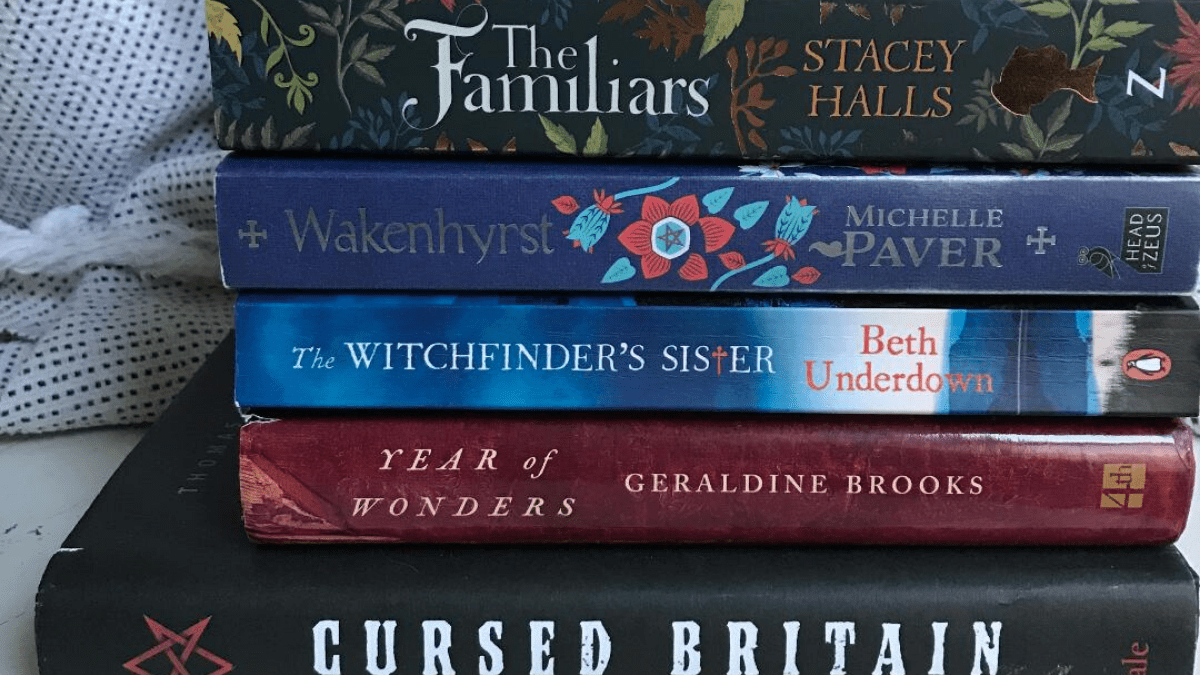
The Familiars is set in northern England in 1612. Heroine Fleetwood Shuttleworth is pregnant and frightened after suffering several miscarriages and desperate to provide her restless husband an heir. In her desperation she reaches out to a midwife, Alice, to help her bring the baby to term. Both are then swept up in the witch trials that engulf the county.

If you’ve read and liked Stacey Halls’ The Familiars you might also like:

The Witchfinder’s Sister – Beth Underdown (fiction)

What’s it about? Inspired by the real-life 1645 story of notorious “Witchfinder General” Matthew Hopkins. The story centres around his sister Alice, recently widowed, pregnant and returned to live with her brother. The town and brother of her childhood have changed and Alice gets caught up in Matthew’s vicious hunt for witches.

Why might I like it? Much like The Familiars the central character in this book is pregnant, swept up in witch hunts and ultimately faces a terrible decision. Both are page-turners, easy reads with a good story.

You might also like:

Year of Wonders – Geraldine Brooks (fiction)

What’s it about? Inspired by the true story of the plague village Eyam the novel follows Anna Frith, a healer, as she deals with the damage the disease wreaks on her community.

Why might I like it? A different perspective on the traditional take on witches. This book will make you want to learn herb lore and natural cures. Diligent and beautifully descriptive it looks at what was behind the fear of witches, what a lot of these women were actually trying to do (heal) and how they held communities together.

You might also like:

Wakenhyrst – Michelle Paver (fiction)

What’s it about? Maud’s father is a murderer. In the Norfolk fens a tragedy unfolds as Maud tells the story leading up to the murder, and how their lives unravelled from the moment her father found ‘The Doom’, a mediaeval painting in their local church.

Why might I like it? Less witchy but still tinged with a mystery of ‘otherness’ and haunted by spirits. A central female protagonist dealing with the injustices of patriarchal oppression and simultaneously finding a connection to nature and the ‘old spirits’ of her environment.

You might also like:

Cursed Britain: A History of Witchcraft and Black Magic in Modern Times – Thomas Waters (non-fiction)

What’s it about? Non-fiction. Thomas Waters explores witchcraft in modern times. The early modern period runs 1500-1800. Modern history generally covers 1800-now. Waters gathers tales from all over the world about cynical quacks and sincere magical healers, raising important questions about the state’s role in regulating radical spiritualities, the fragility of secularism and the true nature of magic.

Why might I like it? This gives historical context and realism to the events that the above fiction books draw on and is an eye-opening read on how ‘otherness’ (whether gender, class or ability biased) is punished.

And finally, you might also like…

Harry Potter: A History of Magic – British Library, J.K. Rowling (non-fiction)

What’s it about? Non-fiction. Harry Potter: A History of Magic is the official book of the exhibition at the British Library. Each chapter showcases a treasure trove of artefacts from the British Library and other collections around the world, beside exclusive manuscripts, sketches and illustrations from the Harry Potter archive.

Why might I like it? It’s fascinating to see all the inspiration behind the Harry Potter magic and also see our nation’s history of witchcraft and magic brought to life through artefacts, essays and other interesting things.

Have you read any of the books listed above? What did you think? Have you read any others that you think should go in this collection? Let me know in the comments below!

If you like Ali Smith’s How To Be Both…

“Which came first? The drawing or the fresco?”

How to Be Both is a bold, intelligent and moving story (or stories). Narrated by Francesco del Cossa, an artist from the fourteen hundreds, and George a girl in the modern day who has just lost her mother. The novel consists of two parts, both numbered One; half the copies are printed with George’s portion of the narrative first.

I read a copy with Francesco’s portion first. The story is told by a disembodied spirit, seemingly trapped in ‘purgatorium’. In this section we explore the artists journey, gender, sexuality, politics, racism and historical accuracy.

In George’s portion we see how her life is unfolding following the sudden death of her mother. Each narrative has echos of the other and this novel is wealth of insight, knowledge and philosophy. It is cleverly done and keeps the reader on their toes – the kind of novel that stays in your head when you’ve put it down. You keep looking at it from different angles to see how it all fits together.

If you’ve read and liked Ali Smith’s How To Be Both you might also like:

Lincoln in the Bardo – George Saunders (fiction)

What’s it about? Willie, President Lincoln’s son, is dead. His spirit is trapped in the graveyard with a host of others – a strange purgatory, where ghosts mingle, gripe, commiserate, quarrel, and enact bizarre acts of penance. It is an astounding story of loss, familial love and mortality

Why might I like it? Like How To Be Both there is the idea of purgatory, penance and the disembodied spirit voices. Both are expertly told – daring ideas handled by masters of the craft and both novels deal with the idea of death, of mortality and the temporary nature of our existence.

You might also like:

The Goldfinch – Donna Tartt (fiction)

What’s it about? Theo Decker survives a terror attack in New York that kills his mother. During the attack he takes a small, mysteriously captivating painting of a goldfinch – one thing that reminds him of her and ultimately draws Theo into the underworld of art.

Why might I like it? How To Be Both and The Goldfinch both explore art. They both contain beautiful descriptions of pieces, discuss the nature and effect art has on individuals and both look at the link between the beauty of art and awareness of our own mortality. Again, these are both expertly written so you know you’re in good hands!

Have you read any of the books listed above? What did you think? Have you read any others that you think should go in this collection? Let me know in the comments below!

If you like Greek mythology…

I genuinely love well-written retellings of the Greek myths, especially if those retellings offer something new. In recent years there has been a plethora of brilliant books that use the mythology, and as it’s (one of) my favourite subjects, I decided the inaugural post on Secondary Reading would be on the Greek myths.

The books below are all beautifully written retellings; some consider the myths from a female perspective, giving a voice to the women in the stories who were traditionally, oxymoronically, vital and disposable. They all give the myths a new, fresh take in beautiful, lyrical prose.

The Silence of the Girls – Pat Barker (fiction)

In the middle of the Trojan war, Briseis – queen of a neighbouring Trojan kingdom is abducted by Achilles. As she adjusts to life in the Greek camp she becomes caught in a power struggle between Achilles and Agamemnon. The Silence of the Girls gives the women of Troy a new voice.

The Children of Jocasta – Natalie Haynes (fiction)

The story of Oedipus is flipped on its head. Told over two narratives, one by Jocasta and one by Ismene the tragedy unfolds with the women of the family at its centre.

The Song of Achilles – Madeline Miller (fiction)

Exiled prince Patroclus is sent to live at the court of King Pelus and his son Achilles. Together, Patroclus and Achilles grow into young men and eventually join the Trojan War. This is a beautiful, epic love story.

Circe – Madeline Miller (fiction)

A beautiful retelling of the myth of Circe, where she is no longer a villain but someone fighting for her place in the world against Gods and men.

Mythos and Heroes – both by Stephen Fry (non-fiction)

If you’ve ever wanted a comprehensive understanding of Greek mythology and the myths of the Greek heroes then these books do just that.

Death of an Ancient King – Laurent Gaude (fiction)

English translation of a French novel. King Tsongor is giving away his daughter Samilia in marriage but on the eve of the wedding, a lone, mysterious rider appears instead to claim Samilia’s hand and war ensues.

Coming soon…

Pandora’s Jar: Women in the Greek Myths – Natalie Haynes, coming May 2020

Have you read any of the books listed above? What did you think? Have you read any others that you think should go in this collection? Let me know in the comments below!

Design a site like this with WordPress.com
Get started